
Digital Detox at Work in 2026: How to Reduce Overwhelm and Avoid Burnout
Running a business. Working in an office. Working from home. Studying. Managing a team. In 2026, no matter what you do, your day probably starts and ends with a screen. Emails. WhatsApp. Teams. Slack. AI tools. Social media. News alerts. Streaming. Notifications.
Kevin K.
2 min read

Introduction
We live in a world where screens never switch off.
From emails and Slack messages to social media updates and late-night scrolling, most of us move from one screen to another without pause. And while digital tools help us work smarter, they can also quietly drain our focus, creativity, and energy.
As we move further into 2026, it’s time to ask a simple question:
Are you in control of your tech - or is it controlling you?
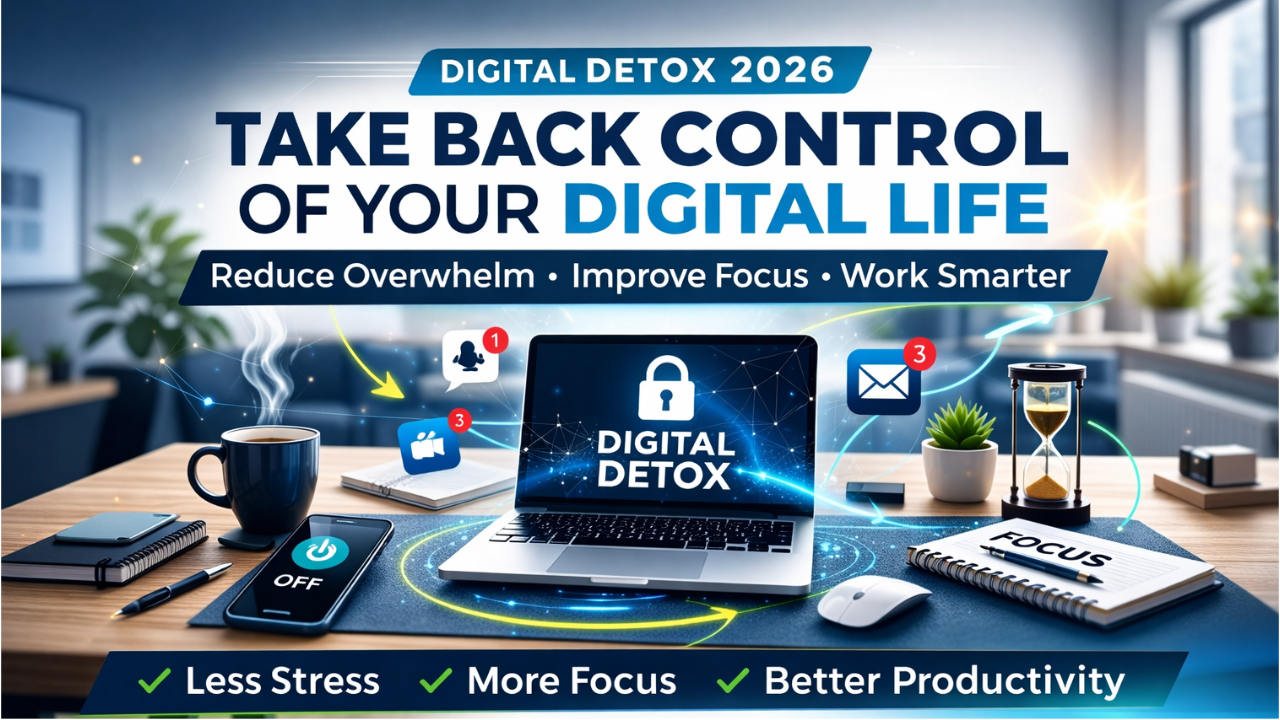
A digital detox at work isn’t about rejecting technology. It’s about using it intentionally. Here’s how anyone - marketers, business owners, managers, remote workers - can reset their habits and reclaim their focus.
1️⃣ What Is a Digital Detox (Really)?
A digital detox doesn’t mean quitting technology.
It means:
Being intentional about when and how you use it
Reducing unnecessary digital noise
Creating space for focus and clarity
Protecting your mental energy
In a world built around notifications, that’s powerful.
💡 Tip: Track how many times you check your phone in one hour. Most people are shocked.
2️⃣ Why 2026 Feels More Intense Than Ever
The pressure isn’t just from emails anymore.
Now we have:
AI tools generating content constantly
Endless scrolling algorithms
Work chats running 24/7
Performance dashboards updating in real time
Remote work blurring boundaries
According to recent research, professionals spend over 90 hours per week in front of screens.
And yet, many still feel “behind”.
💡 Tip: Introduce one 60-90 minute no-notification block daily.
3️⃣ The Hidden Cost of Digital Overload
Constant digital stimulation impacts:
Focus
Creativity
Decision-making
Sleep quality
Mental health
You might think you’re being productive by constantly checking messages - but fragmented attention leads to weaker output.
Deep thinking requires uninterrupted time.
💡 Tip: Try a “No Notifications Before 10am” rule for one week.
4️⃣ Simple Digital Detox Steps Anyone Can Use
You don’t need drastic measures.
Start small:
Turn off non-essential notifications
Schedule email check times instead of constant monitoring
Take screen-free lunch breaks
Remove work apps from your phone after hours
Avoid screens 60 minutes before bed
Go for a short walk without your phone
Small boundaries create big clarity.
💡 Tip: Delete one app that drains your energy for 7 days and see what changes.
5️⃣ Why This Isn’t About Wellness - It’s About Performance
This isn’t just about stress.
It’s about quality of thinking.
Clear thinking leads to:
Better decisions
Better conversations
Better strategy
Better work
In a noisy digital world, focus is now a competitive advantage.
Conclusion
Technology isn’t the enemy.
But constant, unstructured digital consumption is.
Almost everything works better when you unplug it for a few minutes - including you.
As we move deeper into 2026, the people who manage their attention best will perform best.
And that applies to everyone.